From the CHRR Director’s Desk Issue #46
By Stephen M. Gavazzi, Ph.D.
The Latest News, Views, and Announcements
A Celebration of Washington’s Birthday
Today we are celebrating George Washington’s birthday. In that spirit, I offer up a bit of historical fiction to delve into a question that was on my mind today: what would the life of a survey expert have looked like during the era of our first president? Here goes…
It is February of 1775, and a woman named Abigail Turner finds herself juggling two things she never expected to combine: bolts of cloth for the Williamsburg market and a stack of freshly printed “public sentiment forms.” The printer in Philadelphia – an enthusiastic man who smelled permanently of ink – claimed that no government could function without data.
“Ask them three questions,” he said, handing her the stack dramatically. “What troubles them, what they hope for, and what they fear.” He paused. “And remind them to write legibly. Democracy cannot decode chicken scratch.” Abigail began distributing the surveys discreetly, though discretion was difficult when everyone in the nearby tavern wanted to know what you were carrying. Before long, farmers were filling out the forms on the backs of oxen, coopers were balancing them on barrels, and one overconfident blacksmith tried to forge his answers in iron.
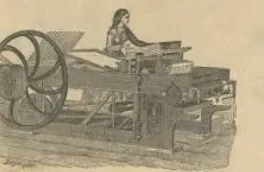
Word spread fast. Too fast. People started making their own copies – some accurate, some with added questions such as “Should we finally agree on a standard teacup size?” and “How many committees is too many committees?” A young courier named Thomas rode so enthusiastically to deliver the surveys north that he accidentally distributed a handful to British soldiers. They filled them out politely, though most of their “chief concerns” involved colonists hiding livestock and refusing to pay for spilled tea.
Still, surveys began circulating everywhere. Abigail even heard rumors that one had made its way to London. A merchant discovered it in his coat pocket midmeeting and was promptly asked by three curious parliamentarians whether colonists truly preferred butter or molasses on bread (it was an inconclusive sample).

By midsummer, the surveys were coming back in droves. Abigail was now running a full-time operations center out of her dining room, which greatly annoyed her cat. As Abigail sorted through the stacks – some thoughtful, some chaotic, some with doodles of Cupids and hearts – she sensed something profound behind the absurdity.
For the first time, ordinary people weren’t just talking about their opinions; they were sharing them in a way that could be tallied, analyzed, and perhaps even used to better understand what her people were experiencing in their lives. Democracy, she realized, wasn’t only built on speeches or declarations. Sometimes it begins with a surprisingly messy pile of survey responses.
And occasionally, a Cupid with a heart.
CHRR’s Leadership Team
As the most recent Quarterly Check-In (QCI) conversations have unfolded, I was reminded that it has been quite a while since we’ve gathered in an all-staff meeting (our recent Winter Holiday party, delightful as it was, does not really count in the same way of course). In light of this, I’ve been considering several options for bringing us back together, whether through a virtual town hall, virtual office hours, or some combination of small-group or large-group in-person meetings. My goal is always the same: to create a format that strengthens communication, supports transparency, and gives us space to reconnect as a team.

I have been discussing different options with the CHRR Leadership Team, and there has been quite a diverse set of opinions shared on this matter. I will continue to brainstorm with Leadership Team members about this issue, as I am eager to create opportunities that reflect what our staff needs most right now.
Thank you in advance for sharing any opinions you might have with your supervisors in service to guiding our next steps.
CHRR Team Member Celebrations
"I can do things you cannot, you can do things I cannot: together we can do great things." -Mother Teresa

This month we are observing the work anniversaries of two valued employees:
- Jessamine Stassen, 3 years of service to CHRR.
- Tammy Zimmerman, 26 years of service to CHRR.
Thank you for your commitment to the CHRR mission!
Things You Might Want to Know

Jin Jun, Ph.D., an assistant professor of Nursing here at Ohio State who has used the American Population Panel to conduct research on healthcare workers, recently had an article published in the journal Workplace Health and Safety.
Here is the abstract: “Despite their proximity to healthcare and being the source of health information, healthcare workers experience high rates of preventable chronic diseases. Work is the most common source of health insurance and other resources, yet only a few studies examined healthcare workers’ preventive care use and the availability of employer-sponsored benefits by healthcare job categories: service workers (e.g., environmental services), support workers (e.g., nursing assistants), or clinicians (e.g., nurses).”
The full article citation: Jun J, Frogner BK, Carle AC, Tubbs-Cooley HL. Preventive Care Utilization, Employer-Sponsored Benefits, and Influences on Utilization by Healthcare Occupational Groups. Workplace Health & Safety. 2026;0(0). doi:10.1177/21650799251408100
Third Article Published by the University Design Institute

I recently co-authored a third article with Ohio State University President Emeritus Gordon Gee and Arizona State University’s David Rosowsky (the last two month’s newsletters have mentioned the previous articles). This article is titled “The University as Navigator” and can be viewed on the University Design Institute website.
From the article: “The task before us is nothing less than reclaiming public trust and restoring the compact with the American people by proving that the University is the essential guide, the capable Navigator, and the steady hand charting a sustainable course for the future.”
Land-Grant Series Continues Through ASC College
In the last newsletter, I noted my participation in a three-part series being offered by our College of Arts & Sciences in celebration of this unit’s 15th year anniversary. Since that last newsletter, the second (with Gordon Gee, entitled How Firm Thy Friendship, Here and Now) and third (with David Staley, entitled Time and Change, Looking into the Future) installments of that series have taken place.
Recordings of all three sessions will be posted on the Arts and Sciences YouTube channel in the very near future.