From the CHRR Director’s Desk Issue #44
By Stephen M. Gavazzi, Ph.D.
The Latest News, Views, and Announcements
What’s New at CHRR
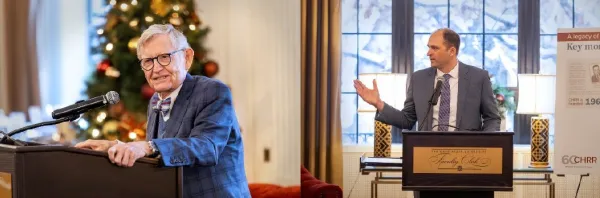
The breakfast event we hosted at The Ohio State University Faculty Club in celebration of our 60th anniversary was a smashing success! Friends, colleagues, and CHRR team members alike packed the place. ASC Divisional Dean Ryan King and Ohio State President Emeritus Gordon Gee were the featured speakers. Huge thanks to Clare Jellick for the leadership she provided for this event and all the other commemorative activities that have surrounded CHRR’s birthday!
CHRR’s Leadership Team
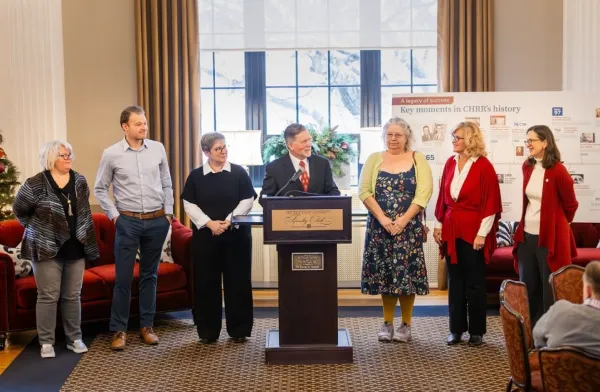
Nothing of significance to report at this time, but I was pleased to have most of the CHRR leadership team on hand for the 60th anniversary celebration. So, I will take this opportunity to share one of the team pictures that was taken during the event.
CHRR Team Member Celebrations

As I have noted in years past, not a single CHRR team member has a work anniversary that falls in December. And so, instead of celebrating any single individual, allow me to express my appreciation for the many long-term employees whose experience and skillsets are the very reason we have been so successful in our first 60 years of work. And let me also take this opportunity to wish everyone a safe and happy holiday season!!!
Things You Might Want to Know
Hope for the Holidays Program: THANK YOU!

Thanks to everyone who contributed to the JamesCare for Life: Hope for the Holidays program! This year, CHRR raised $575 to support cancer patients and their families during the holiday season. Your generosity truly makes a difference!
As always, special thanks to Laura Rusnak for her ongoing leadership for making this charitable activity so successful!
RADAR Article Published by the University Design Institute
I recently co-authored an article with Ohio State President Emeritus Gordon Gee and David Rosowsky, a friend and colleague who is Senior Advisor to Arizona State University President Michael Crow. The article is titled “Turning on the RADAR: Detecting Signals and Navigating Higher Education’s Complexity.”
This article lays out the RADAR model:
R – Recognize emerging signals by gathering data from diverse stakeholders
A – Analyze trends using longitudinal data gathering procedures
D – Diagnose the implications of these trends
A – Act on insights through proactive strategies
R – Review outcomes and recalibrate as needed
“Together, these steps can create a dynamic feedback loop – a true radar system that helps university leaders and other higher education constituents anticipate turbulence and make course corrections, all the while maintaining trust within an increasingly unpredictable environment.” (from the article)